Tools & Technology

Biofeedback

Biofeedback uses real-time body signals to train self-regulation. In practice, that can include heart rate variability, skin conductance, peripheral temperature, and muscle activity. Each of these gives a slightly different window into the nervous system — some most useful for stress and anxiety, some for sleep and recovery, some for pain and headaches, and some for performance under pressure.
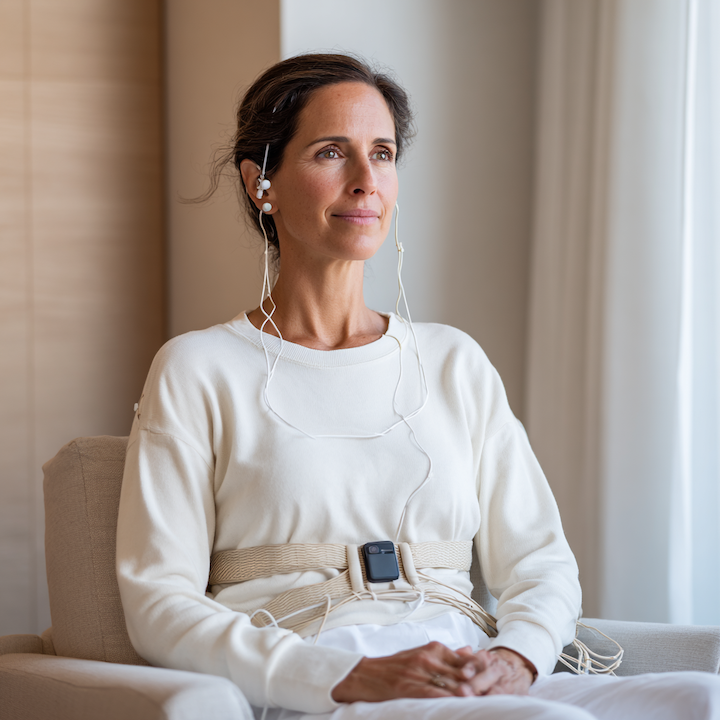
Biofeedback sensors and setup

What it is

Biofeedback works by making physiology visible while it is happening. When a person can see changes in heart rhythm, sweat response, skin temperature, or muscle tension in real time, it becomes easier to practice regulation deliberately and repeat it until it becomes more stable. That is one reason biofeedback can be useful across several areas of this site, especially stress, sleep, performance, pain, and emotional regulation.

Main types I use

HRV biofeedback

HRV biofeedback focuses on the interaction between breathing and heart rhythm. It is one of the strongest biofeedback modalities for stress and anxiety, and it can also be useful for panic, sleep onset, emotional regulation, and performance. In a meta-analysis of 24 studies including 484 participants, HRV biofeedback produced a large reduction in stress and anxiety versus control (Hedges' g = 0.83). A later meta-analysis of 14 randomized trials also found a medium effect on depressive symptoms (g = 0.38).

Skin conductance biofeedback

Skin conductance biofeedback tracks sympathetic arousal through sweat-gland activity. It is especially useful when the main issue is feeling “on edge,” chronically activated, or physiologically reactive under pressure. In a 2025 randomized study, a single 10-minute electrodermal biofeedback session reduced self-reported state anxiety and shifted skin-conductance measures in the expected direction. In a separate 5-week athlete pilot combining skin conductance and peripheral temperature feedback, autonomic markers and sustained attention improved.

Temperature biofeedback

Temperature biofeedback is usually based on peripheral warming, often at the fingers or hands. It has a long history in migraine and stress-related vascular tension, and it can also be useful for people who stay physically constricted when they are trying to settle. In an early controlled migraine trial, thermal biofeedback reduced total headache activity, headache duration, peak intensity, and analgesic use compared with a waiting-list control. A more recent migraine meta-analysis confirms that biofeedback remains an effective non-pharmacological option for reducing headache frequency and severity.

Muscle biofeedback

Muscle biofeedback uses surface EMG to show how much tension a muscle or muscle group is carrying. It is especially relevant for tension-type headache, jaw and neck tension, shoulder tension, and some persistent pain patterns. In a meta-analysis of 53 studies in tension-type headache, biofeedback produced a medium-to-large effect (d = 0.73) that remained stable over an average 15-month follow-up, with the strongest improvement in headache frequency. A focused 2023 systematic review also found promising reductions in headache intensity with EMG biofeedback.

In practice

In practice, biofeedback often becomes the most direct way to work on regulation. It can help a person learn what activation feels like in the body, how recovery actually changes in real time, and which lever is most responsive in their case — breathing, autonomic arousal, vascular tension, or muscle tension. That can be useful as a stand-alone intervention, and it can also strengthen the effect of neurofeedback, photobiomodulation, and broader work on sleep, stress, pain, and performance.

Related therapy areas

Book an appointment to discuss your situation and decide on the most appropriate starting point.

Book an appointment