What it is
How it works
PBM delivers controlled light using specific wavelengths, power settings, and treatment durations. The core cellular mechanism — activation of cytochrome c oxidase in the mitochondrial respiratory chain — is the same whether the target is the brain or the body. The difference is delivery format and intended effect: transcranial PBM focuses on brain regulation and network activity, while full-body PBM focuses on tissue-level recovery, pain modulation, and systemic effects. Both can be used on their own or combined with neurofeedback and biofeedback.
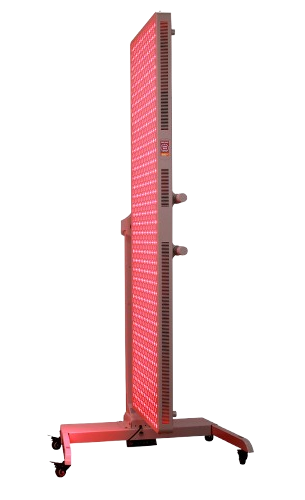
Full-body PBM: RDPro6000-FS
For full-body applications, I use the RDPro6000-FS, a high-power panel delivering red (660 nm) and near-infrared (850 nm) light across a large surface area. At this scale, a single session covers the full body, making it especially practical for recovery work, musculoskeletal pain, systemic inflammation, and cases where the goal is to support tissue-level readiness alongside brain-based training.
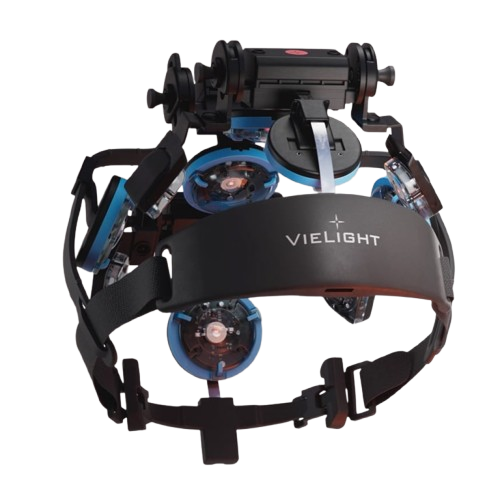
Brain-targeted PBM: Vielight Neuro Pro 2
For transcranial PBM, I use the Vielight Neuro Pro 2, a high-configurability brain PBM system built around 810 nm near-infrared light. According to Vielight's practitioner guide, it includes 10 scalp LEDs and allows clinicians to adjust pulse frequency, power, individual LED activation, sweeps, and staged protocols. Vielight's research page also lists published and ongoing clinical studies using its brain-PBM technology across multiple neurological and psychiatric areas.
The Science
Anxiety, mood, and sleep
The clearest clinical signal for brain-targeted PBM so far is in anxiety and sleep. In an 8-week pilot study of generalized anxiety disorder, Hamilton Anxiety scores fell from 17.3 to 8.5, with a large effect size (d = 1.47) and better sleep (Maiello et al., 2019). In a 2025 randomized controlled trial in chronic insomnia, just 3 sessions of frontal tPBM improved Pittsburgh Sleep Quality Index scores by 4.6 points versus sham, while daytime sleepiness fell by 4.1 points (Mehdizadeh et al., 2025).
Autism, attention, and cognition
PBM is also becoming more relevant in developmental and cognitive work. In a randomized sham-controlled trial in children aged 2 to 6 years with autism, active treatment improved CARS scores by 7.23 points more than sham after 8 weeks (Leisman et al., 2024). Published and ongoing work with Vielight technology also spans cognition-focused and neurorehabilitation contexts, which fits well with a practice that combines PBM with other brain-based tools.
Brain-state modulation and recovery
PBM is especially interesting when the goal is to support readiness, recovery, and network regulation. In a randomized sham-controlled pilot study, a single session of 40 Hz near-infrared tPBM significantly increased resting-state alpha, beta, and gamma power, reduced delta and theta, and changed measures of brain-network synchrony (Zomorrodi et al., 2019). That kind of result helps explain why PBM can pair well with neurofeedback in a broader treatment plan.
Muscle recovery and physical performance
The evidence base for full-body red and NIR PBM in exercise recovery is well-established. In a systematic review and meta-analysis of randomized trials, pre-exercise photobiomodulation consistently reduced creatine kinase — a key marker of muscle damage — alongside improvements in muscle fatigue and force recovery compared with sham, with effects strongest when applied before high-intensity exercise (Leal-Junior et al., 2015). These findings make full-body PBM a practical tool in athletic and high-performance contexts where session-to-session recovery shapes how well a person can train, compete, or sustain a demanding schedule.
Chronic pain, musculoskeletal conditions, and inflammation
For musculoskeletal pain, red and NIR PBM has a substantial controlled evidence base. In knee osteoarthritis, multiple randomized trials and meta-analyses have found consistent reductions in pain intensity and improvements in function with NIR wavelengths. In chronic low back pain, systematic reviews support meaningful pain reduction and functional improvement. At the tissue level, controlled studies have documented reductions in pro-inflammatory markers including TNF-α and IL-1β, which is relevant when local or systemic inflammation is part of the picture. Combined with brain-targeted PBM and neurofeedback, the full-body approach can address both the peripheral and central components of persistent pain.