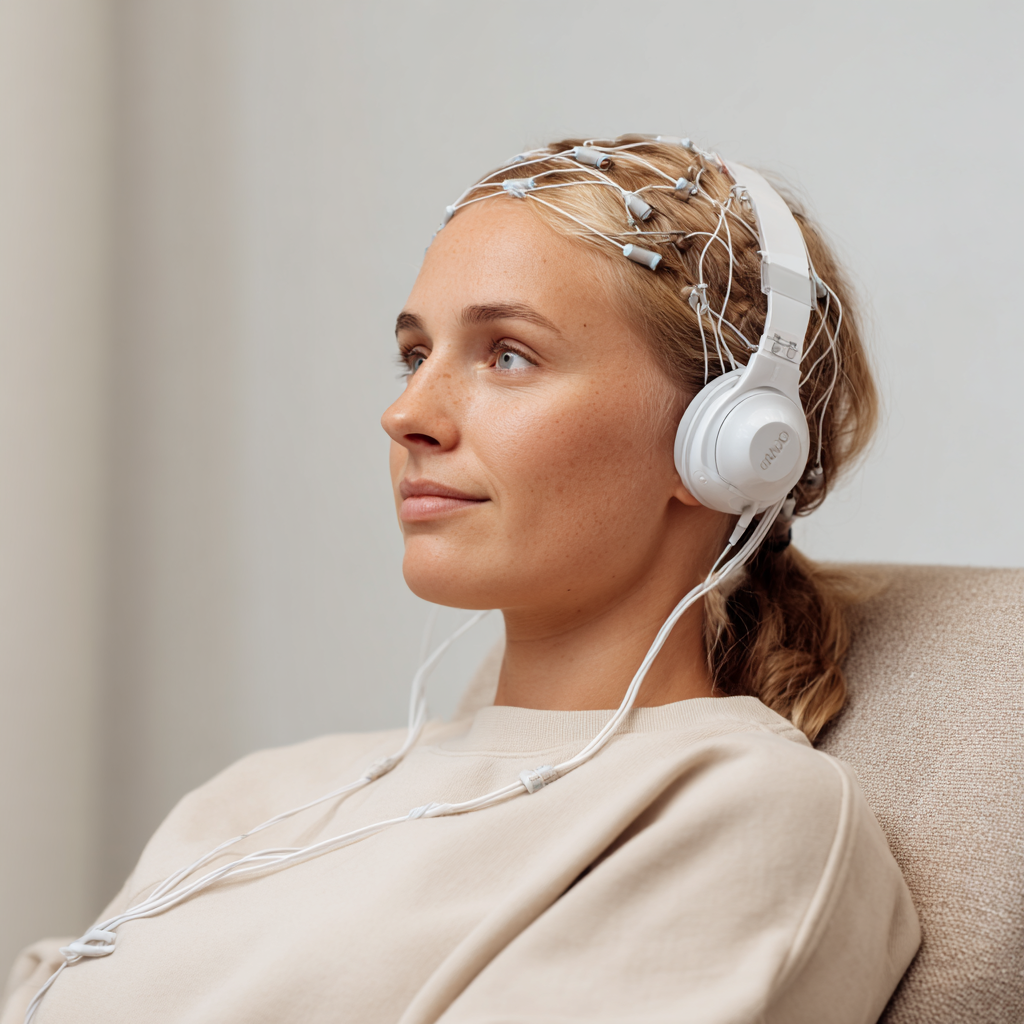
What it is
Traditional neurofeedback
Traditional neurofeedback usually trains a more defined brain signal or protocol, such as SMR, theta/beta, or slow cortical potentials. It is often useful when the aim is more targeted (for example attention regulation, state control, or a protocol selected based on qEEG findings). At its core, it is a form of self-regulation training in which EEG activity is measured continuously and translated into immediate feedback.
ISF neurofeedback
ISF neurofeedback focuses on much slower brain dynamics and is especially relevant when the main issue is regulation itself: a system that does not settle well, shifts state too easily, or has difficulty returning to baseline. That is one reason it appears so often in the areas most central to this practice: stress, trauma, sleep, pain, and post-concussive symptoms.
The science
Attention and individualized protocol selection
In ADHD, neurofeedback works best when the protocol is chosen for the individual. In a multicenter QEEG-informed study of 114 patients, 70% achieved at least 50% symptom reduction and 55% reached remission by the end of treatment (Krepel et al., 2020). That fits well with a more personalized view of neurofeedback: matching the training to the actual pattern and selecting the protocol accordingly.
PTSD
A meta-analysis of 7 randomized PTSD studies found mean remission rates of 79.3% in neurofeedback groups versus 24.4% in controls, with a large pooled post-treatment effect (SMD = −1.76, a large effect) (Askovic et al., 2023).
Sleep and post-concussion
ISF neurofeedback targets the slow rhythms tied to sleep regulation, which is why it shows up here. In a 10-session study in 40 people with insomnia, ISF neurofeedback was associated with lower heart rate and blood pressure, improved finger and core temperature, and significant reductions in depression, anxiety, and stress (Bekker et al., 2021). In a randomized controlled study of post-concussive symptoms, ILF neurofeedback significantly improved attention (p = 0.0022), while also improving headache, sleep, quality of life, depressive symptoms, and PTSD symptoms (Carlson et al., 2025).
Pain and symptom amplification
ISF neurofeedback also has a recent signal in chronic pain. In a double-blind randomized placebo-controlled study in chronic low back pain, the pgACC-targeted ISF protocol produced clinically meaningful improvement in 53% for pain severity, 80% for pain interference, and 73% for disability at 1-month follow-up (Adhia et al., 2023).
In practice, the key question is which form of neurofeedback fits the person's qEEG pattern. qEEG can show whether the better starting point is a focused traditional protocol (for example SMR or theta/beta) or an ISF approach, and we shape the sessions from there.