Neurofeedback and biofeedback in Neuchâtel

ADHD and attention in adults

In adults, ADHD is diagnosed by a psychiatrist or a specialized psychologist, and the treatment offered is most often medication, whether you take it today or have stopped. I offer neurofeedback: it trains the rhythms of your brain linked to attention, so you stay on a task more easily.

  • Recognized by ASCA and RME: reimbursement possible through your supplementary insurance, depending on your policy.
  • I see patients in French, English and Greek.

★★★★★ 5.0 on Google

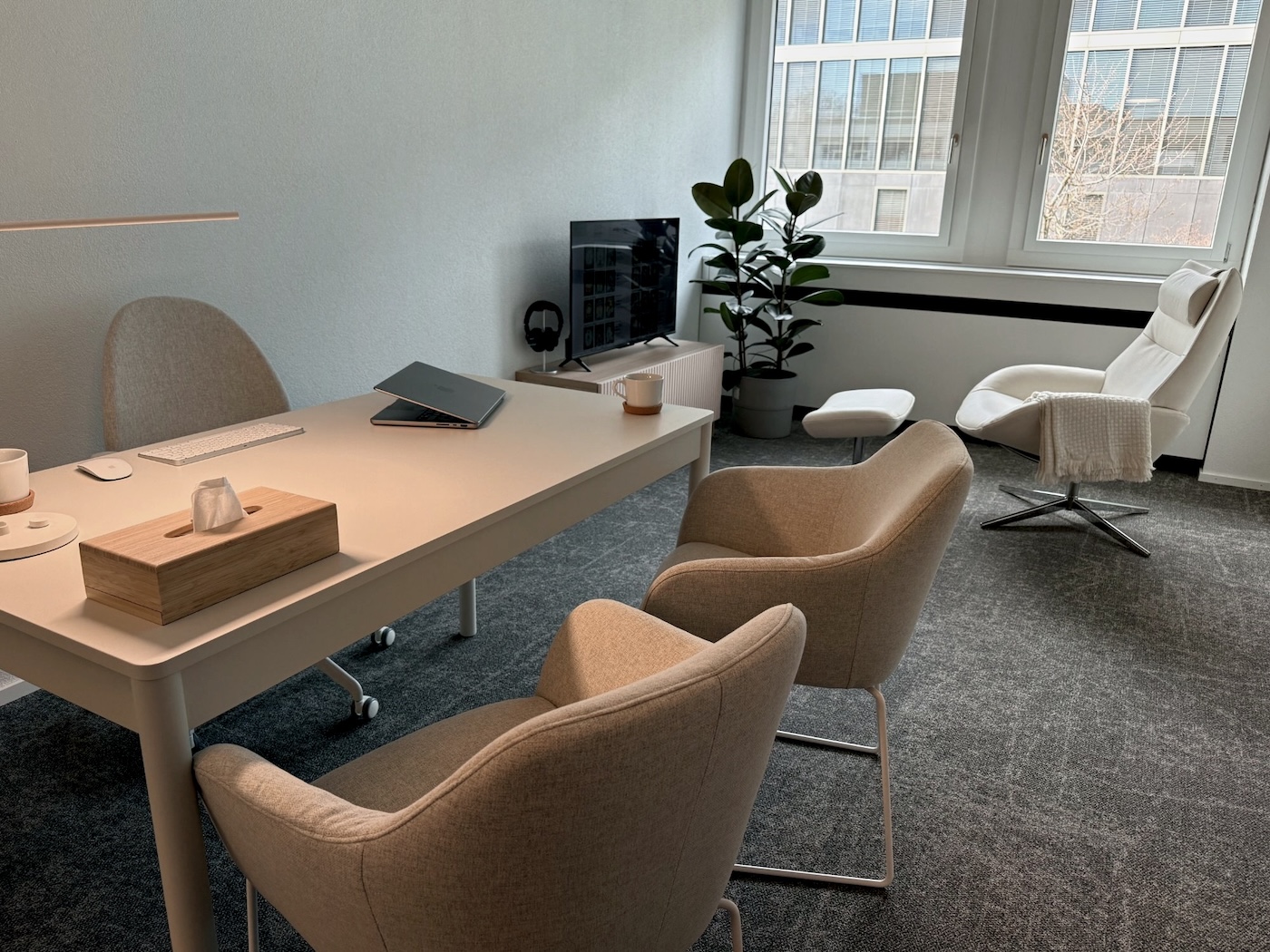
The desk of the first consultation, at the practice in Neuchâtel

What the studies show

Adults with ADHD

In a study of 51 adults with ADHD, the score for everyday attention lapses fell by 20 points with training to stay alert that used skin-conductance biofeedback. It fell by 6.4 points with information about ADHD and attention exercises. Study

Concentration

In a study of 30 basketball players, the score on a 60-second concentration test had risen by 9.2 points one month after training that combined heart-rate-variability biofeedback, slow breathing and mental imagery. It had fallen by 0.1 points in the players who watched motivational basketball videos. Study

In children

In a study of children with ADHD, the symptoms rated by their mothers fell by 22 points with frequency-band neurofeedback. They did not change in the children without neurofeedback. Study

The ADHD and attention in children page gives more results.

What the sessions aim for

I choose the method from what brings you and your brain's activity, recorded in session.

Neurofeedback

The rhythms of attention

The sound follows the sensorimotor rhythm, or the balance between two rhythms, theta and beta. Training aims at a steadier level of arousal, to stay on a task and pause before acting.

Neurofeedback

Low frequency

It trains the slowest changes in the brain's activity and aims at steadier alertness through the day.

Biofeedback

Skin conductance

It follows how alert your body is, and you watch it change on the screen. Training aims to restore alertness when attention drops.

A session at the practice

The sensors

A few sensors on the skin. They measure and send nothing into your body.

The sound

In neurofeedback you listen through headphones to a sound that follows your brain's activity. You have nothing else to do.

The screen

In biofeedback you watch your pulse or the tension in your muscles change on the screen, as in a mirror.

Measurement

A session lasts an hour. I record the signals we train and adjust what follows from those measurements.

5.0 Google reviews

Viktoria Luisen

★★★★★

I went through the full assessment with Dimitris (qEEG, biofeedback, the discussions). I did several sessions and we looked at my results in depth. After a few weeks I genuinely felt better, and the data showed the change too. A calmer nervous system and steadier focus during the day. It also gave me the courage to put more focus on my creativity again, instead of pushing it down.

It was the first time I've used these methods, and it's pretty astonishing that after e.g. just 3 minutes of training (aligned to my brain waves), your eyes feel tired but your body feels more awake.

Dimitris doesn't guess. He measures, looks at the data, explains what he sees in language you can actually follow, and only then designs the training. The systems-biology background shows that he treats you as a whole system, not a symptom checklist. Every session had a clear rationale, and he was honest about what the data did and didn't show.

The practice itself is calm and professional, and he takes the time. You can feel that he is careful with what he says and makes sure his work is science-based. The most beautiful part: I felt that someone genuinely wants the patient to get better. You can feel the passion for helping others (and for the data ;) ).

Highly recommended. I'm continuing my training sessions with him.

Book an appointment

One hour at the practice to talk about your situation and what you have already tried, then decide together what comes next.

Book a first consultation
References (3)
  • Paul M, Garg K, Singh Sandhu J (2012). Role of biofeedback in optimizing psychomotor performance in sports. Asian Journal of Sports Medicine, 3(1), 29-40. DOI 10.5812/asjsm.34722. PMID 22461963.
  • Salomone S, Fleming GR, Shanahan JM, Castorina M, Bramham J, O'Connell RG, et al. (2015). The effects of a Self-Alert Training (SAT) program in adults with ADHD. Frontiers in Human Neuroscience, 9, 45. DOI 10.3389/fnhum.2015.00045. PMID 25713523.
  • Shojaei B, Naeim M, Kazemi Z, Taheri M, Imannezhad S, Mohammadi Y (2024). Reducing symptoms of attention deficit/hyperactivity disorder (ADHD) in elementary students: the effectiveness of neurofeedback. Annals of Medicine and Surgery, 86(5), 2651-2656. DOI 10.1097/MS9.0000000000001861. PMID 38694339.