Children and adolescents

ADHD and attention in children

Your child finds it hard to pay attention or sit still, and their pediatrician has talked about adjustments at school or medication. I offer neurofeedback, from age 2: your child watches their favorite cartoon, and the sound mixed into the soundtrack follows their brain's activity.

  • Recognized by ASCA and RME: reimbursement possible through your supplementary insurance, depending on your policy.
  • I see patients in French, English and Greek.

★★★★★ 5.0 on Google

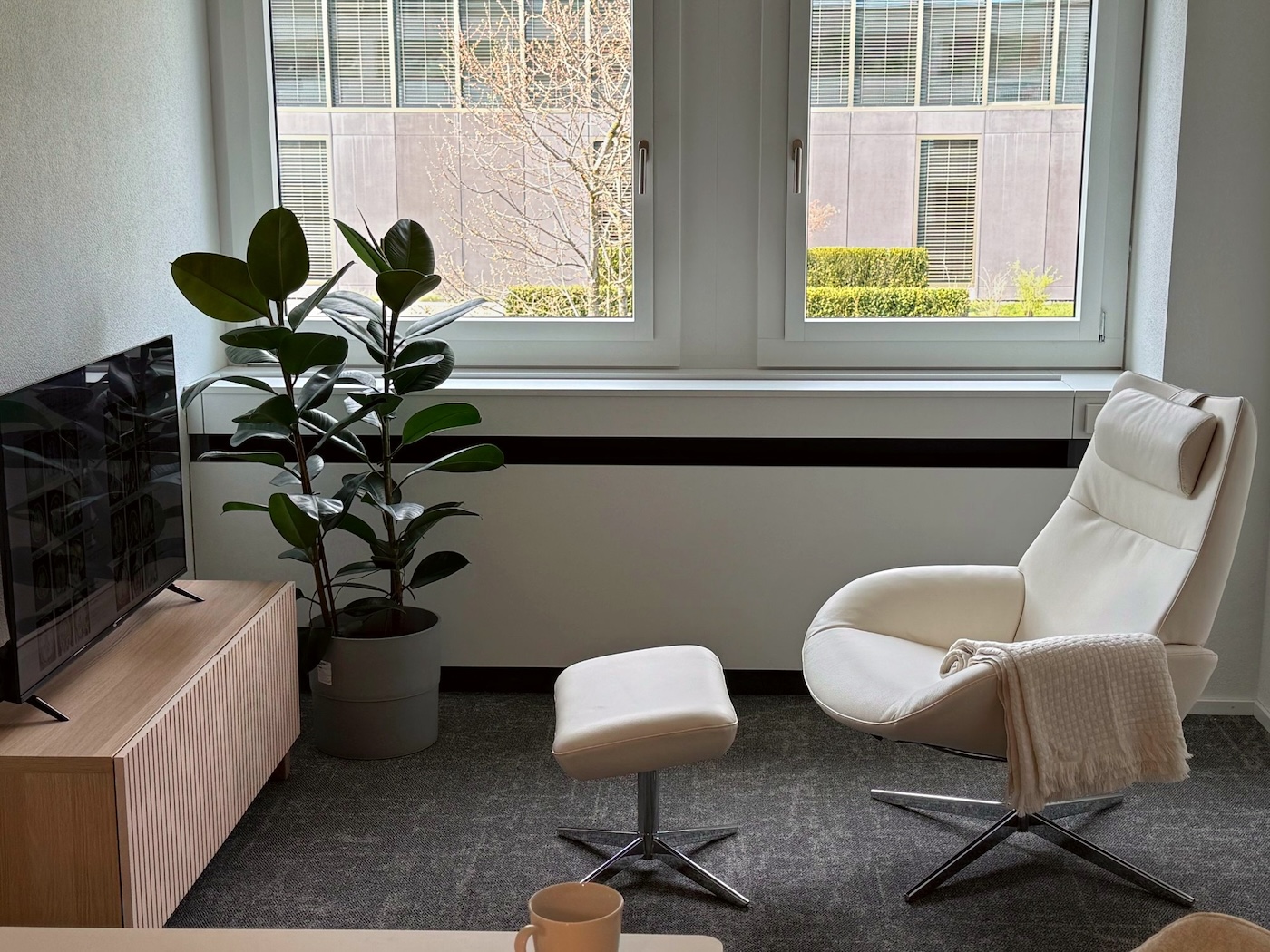
The treatment chair by the window

A session for your child

Your child settles in front of the screen with headphones on, and we choose the cartoon together. A few sensors on their head record their brain's activity. The neurofeedback sound, which follows this activity, is mixed into the cartoon's soundtrack: session after session, their brain learns from this sound.

Neurofeedback of the sensorimotor rhythm, or of the balance between the theta and beta rhythms, aims at a steadier alertness that supports attention and the ability to stop before acting. I choose from the recording of your child's brain. At every session I record the signals we train and adjust what follows from those measurements.

What the studies show

Attention and ADHD

In a study of children with ADHD, the symptoms rated by their mothers fell by 22 points with frequency-band neurofeedback. They did not change in the children without neurofeedback. Study

In a study of 112 children and adolescents with ADHD, the symptoms rated by their parents fell by 26 points over twelve weeks with neurofeedback combined with vitamin D3. They fell by 1.1 points without treatment. Study

Autism

In a study of 86 autistic children aged 6 to 13, the autism symptom score fell by 40 points with neurofeedback added to exercises suited to the way they learn. It fell by 19 points with the exercises alone. Study

In a study of 41 autistic adolescents, difficulties with communication and relating to others, rated by the parents, fell by 21 points with slow cortical potential neurofeedback. They fell by 14 points with the usual consultations. Study

Learning

In a study of 40 children with a learning disorder, their rank in mathematics compared with children of the same age rose by 7.7 percentile points with neurofeedback set from their qEEG. It fell by 8.8 points in the children who received a simulated neurofeedback or were waiting. Study

In a study of 19 dyslexic children, the score for reading made-up words rose by 9% with neurofeedback set from the qEEG added to remedial teaching. It fell by 4% with remedial teaching alone. Study

Stomach pain

In a study of 64 children and adolescents with recurrent stomach pain, the pain had gone in 72% of them after a program combining temperature biofeedback and dietary fiber. It had gone in 7% of those who received the fiber only. Study

5.0 Google reviews

Viktoria Luisen

★★★★★

I went through the full assessment with Dimitris (qEEG, biofeedback, the discussions). I did several sessions and we looked at my results in depth. After a few weeks I genuinely felt better, and the data showed the change too. A calmer nervous system and steadier focus during the day. It also gave me the courage to put more focus on my creativity again, instead of pushing it down.

It was the first time I've used these methods, and it's pretty astonishing that after e.g. just 3 minutes of training (aligned to my brain waves), your eyes feel tired but your body feels more awake.

Dimitris doesn't guess. He measures, looks at the data, explains what he sees in language you can actually follow, and only then designs the training. The systems-biology background shows that he treats you as a whole system, not a symptom checklist. Every session had a clear rationale, and he was honest about what the data did and didn't show.

The practice itself is calm and professional, and he takes the time. You can feel that he is careful with what he says and makes sure his work is science-based. The most beautiful part: I felt that someone genuinely wants the patient to get better. You can feel the passion for helping others (and for the data ;) ).

Highly recommended. I'm continuing my training sessions with him.

Book an appointment

One hour at the practice to talk about your child, their difficulties and their care, then decide together what comes next. On request, I send their pediatrician a short report.

Book a first consultation
References (7)
  • Breteler MH, Arns M, Peters S, Giepmans I, Verhoeven L (2010). Improvements in spelling after QEEG-based neurofeedback in dyslexia: a randomized controlled treatment study. Applied Psychophysiology and Biofeedback, 35(1), 5-11. DOI 10.1007/s10484-009-9105-2. PMID 19711183.
  • Huang MX, Yu Q, Li YY (2024). A prospective randomized controlled study of neurofeedback combined with learning style profile intervention training in children with high-functioning autism (in Chinese). Chinese Journal of Contemporary Pediatrics, 26(10), 1066-1071. DOI 10.7499/j.issn.1008-8830.2405054. PMID 39467676.
  • Humphreys PA, Gevirtz RN (2000). Treatment of recurrent abdominal pain: components analysis of four treatment protocols. Journal of Pediatric Gastroenterology and Nutrition, 31(1), 47-51. DOI 10.1097/00005176-200007000-00011. PMID 10896070.
  • Konicar L, Radev S, Prillinger K, Klöbl M, Diehm R, Birbaumer N, et al. (2021). Volitional modification of brain activity in adolescents with Autism Spectrum Disorder: A Bayesian analysis of Slow Cortical Potential neurofeedback. NeuroImage: Clinical, 29:102557. DOI 10.1016/j.nicl.2021.102557. PMID 33486138.
  • Martínez-Briones BJ, Flores-Gallegos R, Cárdenas SY, Barrera-Díaz BE, Fernández T, Silva-Pereyra J (2023). Effects of neurofeedback on the self-concept of children with learning disorders. Frontiers in Psychology, 14, 1167961. DOI 10.3389/fpsyg.2023.1167961. PMID 37255511.
  • Rahmani M, Mahvelati A, Farajinia AH, Shahyad S, Khaksarian M, Nooripour R, et al. (2022). Comparison of Vitamin D, Neurofeedback, and Neurofeedback Combined with Vitamin D Supplementation in Children with Attention-Deficit/Hyperactivity Disorder. Archives of Iranian Medicine, 25(5), 285-393. DOI 10.34172/aim.2022.47. PMID 35943003.
  • Shojaei B, Naeim M, Kazemi Z, Taheri M, Imannezhad S, Mohammadi Y (2024). Reducing symptoms of attention deficit/hyperactivity disorder (ADHD) in elementary students: the effectiveness of neurofeedback. Annals of Medicine and Surgery, 86(5), 2651-2656. DOI 10.1097/MS9.0000000000001861. PMID 38694339.